Durable Displays vs Consumer Monitors: Key Differences for Professional Environments
Thinking of using standard screens for your security setup? Discover the 7 key differences between durable displays and consumer monitors, and learn why 24/7 reliability is critical for professional surveillance.
Table of contents
Share
Executive Summary
A durable display—often referred to as a commercial-grade or surveillance monitor—is designed for continuous 24/7 operation in demanding environments. Unlike consumer monitors, which are built for limited daily use, durable displays provide superior reliability, physical protection, and system integration.
For system integrators and organisations deploying surveillance systems, understanding the difference between durable displays and consumer monitors is critical to ensuring stable performance, reducing downtime, and achieving lower total cost of ownership across long-term operations.
Why Consumer Monitors Fail in Surveillance Systems
Many surveillance systems fail not because of cameras, networks, or software—but because of the display.
At first glance, consumer monitors appear to be an economical initial choice. They are widely available, offer high resolution, and are suitable for general use. However, in real-world surveillance deployments—such as transportation hubs, industrial facilities, and control rooms—these monitors are fundamentally unequipped to handle continuous operation or harsh environmental conditions.
A common question is: can a consumer monitor be used for CCTV or surveillance systems?
The short answer is no—at least not for professional or 24/7 applications.
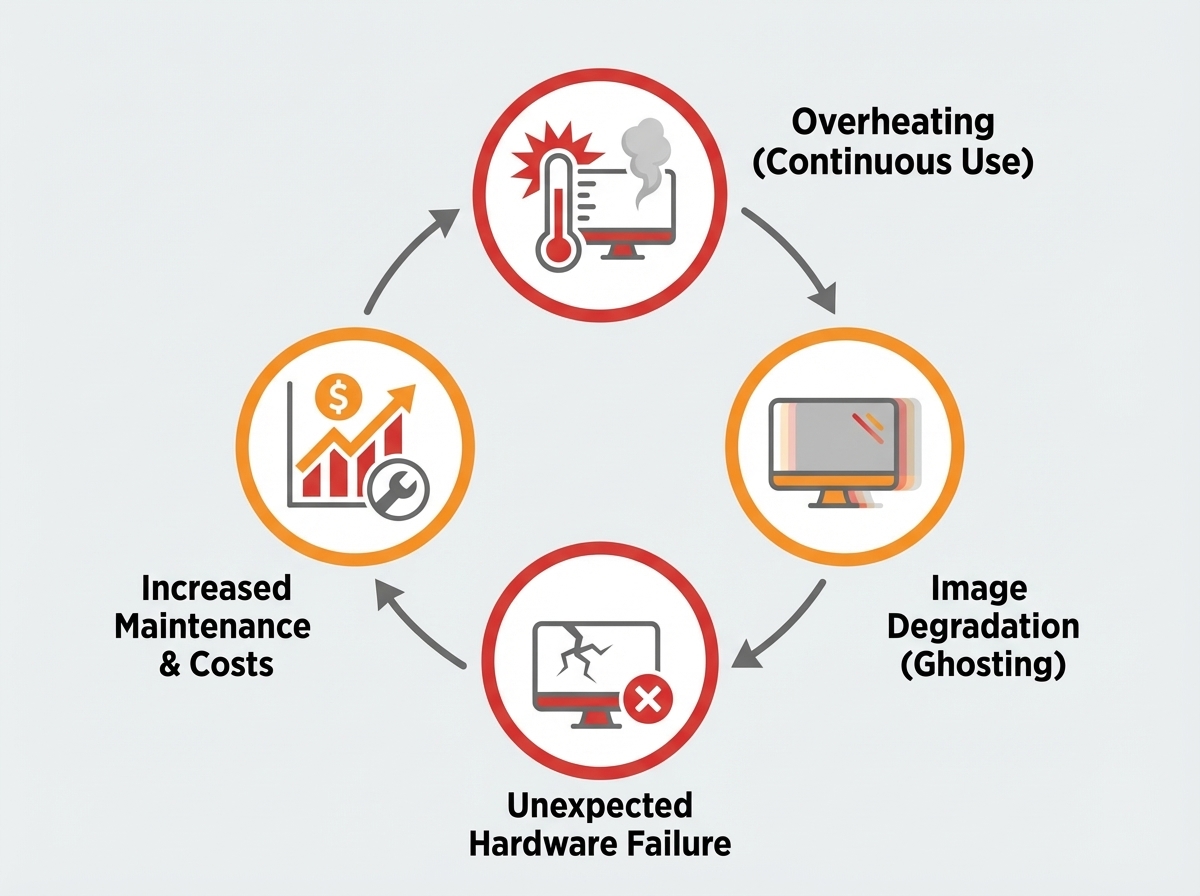
Using a consumer monitor in a critical environment often leads to:
Overheating during continuous use
Image degradation and permanent ghosting over time
Unexpected hardware failure
Increased maintenance and replacement costs
Understanding why these issues occur begins with examining how consumer monitors differ from durable displays.
What Is a Consumer Monitor?
Consumer monitors are designed primarily for home and office environments. They are built for intermittent use—typically 6 to 8 hours per day—in temperature-controlled and low-risk conditions.
While they may provide excellent image quality for everyday tasks, their design priorities focus on affordability and visual performance rather than structural durability or operational stability.
As a result, consumer monitors lack:
Structural protection against physical impact
Passive thermal management for extended operation
Resistance to environmental factors such as dust or humidity
Long-term reliability under continuous use
What Is a Durable Display?
A durable display is engineered for professional environments where reliability, continuous operation, and environmental resistance are essential. These displays are designed to support 24/7 operation while maintaining consistent image performance and structural integrity over time.
Unlike consumer monitors, durable displays are built with long-term deployment in mind—ensuring that performance remains stable even under demanding physical conditions.
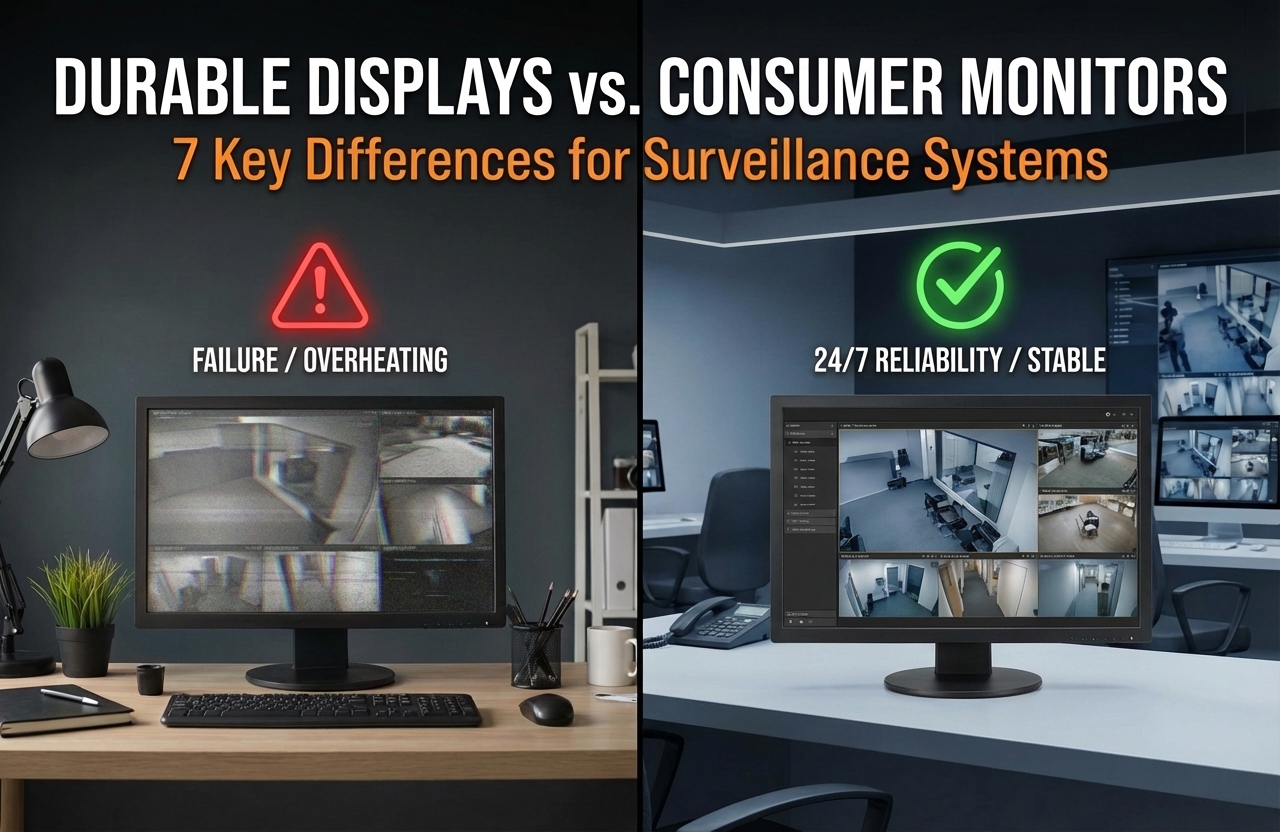
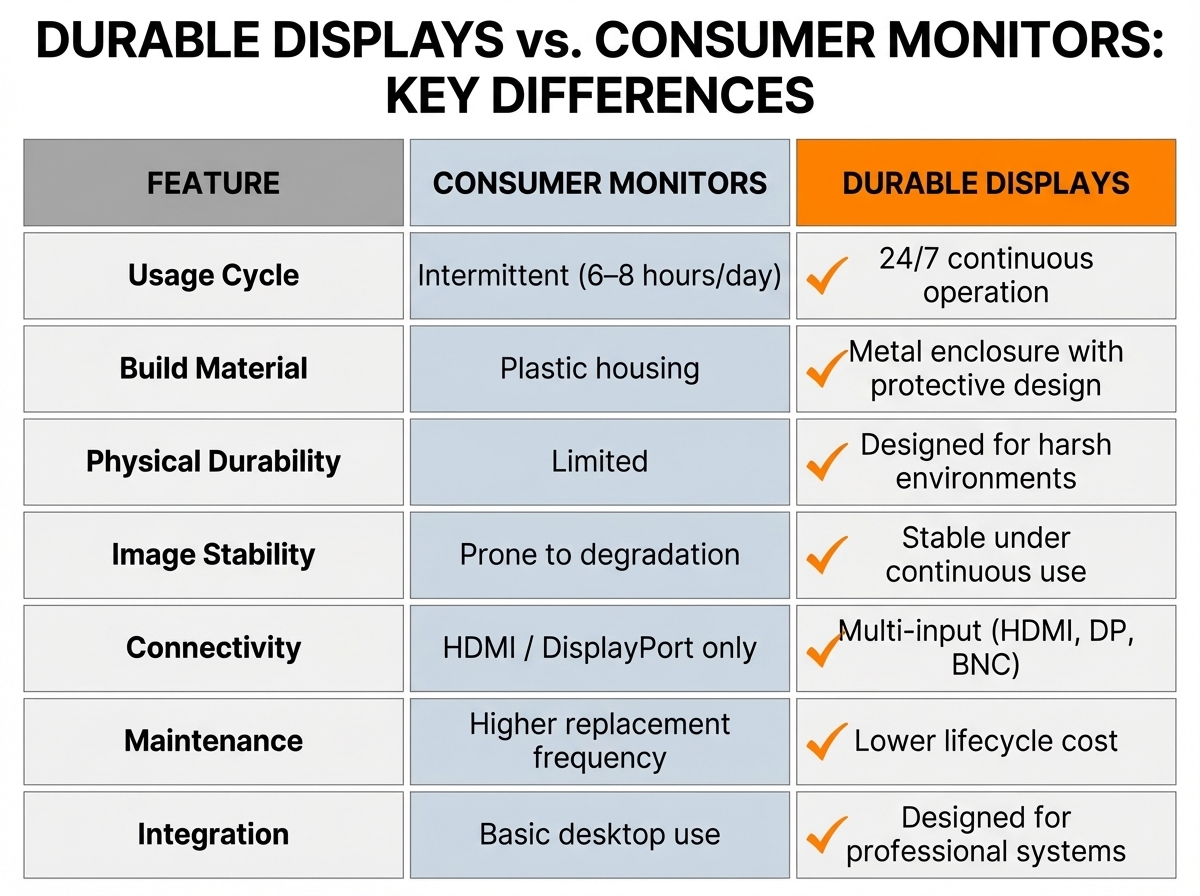
Durable Displays vs Consumer Monitors: Key Differences
Feature
Consumer Monitors
Durable Displays
Usage Cycle
Intermittent (6–8 hours/day)
24/7 continuous operation
Build Material
Plastic housing
Metal enclosure with protective design
Physical Durability
Limited
Designed for harsh environments
Image Stability
Prone to degradation
Stable under continuous use
Connectivity
HDMI / DisplayPort only
Multi-input (HDMI, DP, BNC)
Maintenance
Higher replacement frequency
Lower lifecycle cost
Integration
Basic desktop use
Designed for professional systems
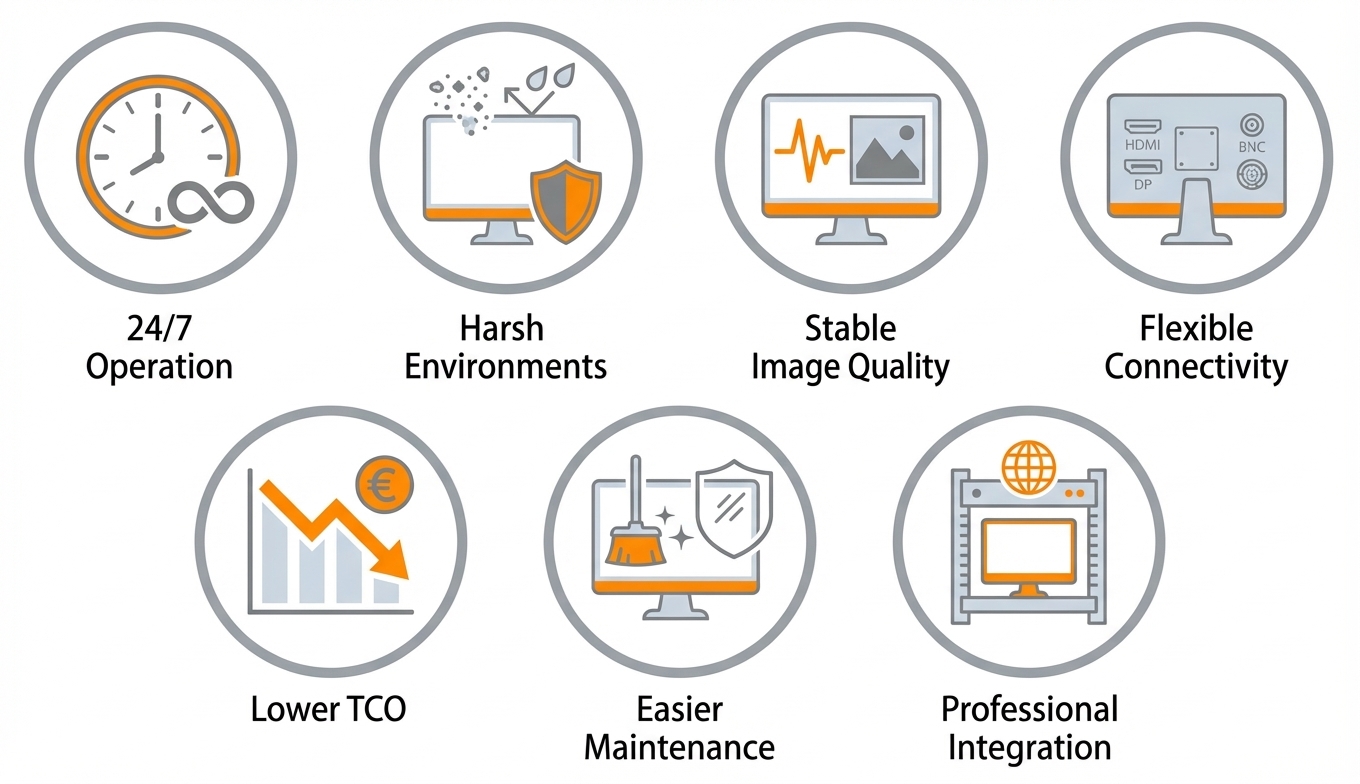
7 Key Differences Explained
Designed for Continuous 24/7 Operation: Consumer monitors are not intended for uninterrupted use. Running them continuously accelerates component wear, leading to overheating and early failure. Durable displays are specifically designed for continuous operation, backed by high MTBF (Mean Time Between Failures) ratings to ensure stable performance across extended periods.
Built for Harsh Environments: Surveillance environments expose hardware to dust, vibration, physical impact, and temperature fluctuations. Consumer monitors offer limited protection, while durable displays use reinforced materials—such as commercial-grade metal enclosures and IK-rated protective glass—to withstand these real-world conditions.
Stable Image Quality Without Degradation: Surveillance feeds often display static elements such as timestamps or fixed camera views. Consumer monitors can experience irreversible image persistence or degradation over time. Durable displays integrate pixel-shifting and image retention prevention technologies to maintain stable, accurate image quality during continuous operation.
Flexible Connectivity for Surveillance Systems: Consumer monitors often require external converters when integrated into legacy CCTV systems. Durable displays support multiple input types—including native BNC with loop-out, HDMI, and DisplayPort—allowing for seamless integration and daisy-chaining across both analogue and modern IP infrastructure.
Lower Total Cost of Ownership (TCO): Although consumer monitors carry a lower upfront cost, their rapid failure rate requires frequent replacement. Durable displays offer significantly longer operational lifespans and reduced maintenance interventions, resulting in superior long-term value and a lower total cost of ownership.
Easier Maintenance in Demanding Environments: The exposed panels and plastic bezels of consumer monitors are sensitive to environmental exposure and industrial cleaning solvents. Durable displays featuring hardened optical glass are designed for environments where rigorous cleaning and maintenance are required, ensuring consistent optical clarity over time.
Designed for Professional Integration: Consumer monitors are built for standalone desktop use. Durable displays are designed to support system integrators, offering features like EMI shielding and versatile mounting options to enable flexible installation, scalable deployment, and reliable system performance.
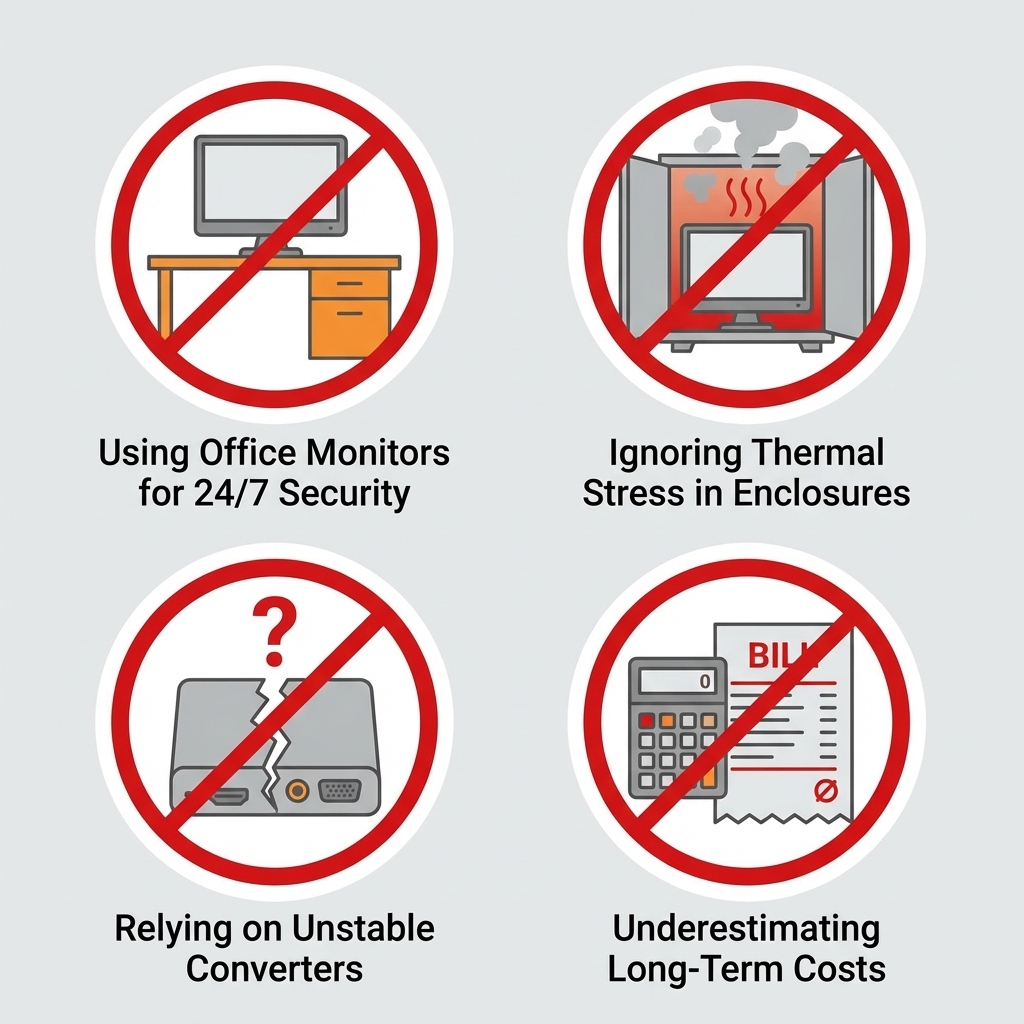
Common Mistakes When Using Consumer Monitors in Surveillance Systems
Many organisations underestimate the importance of the display when designing surveillance architecture. Common mistakes include:
Using office-grade monitors for 24/7 security applications
Ignoring thermal stress when mounting screens in enclosed environments
Relying on unstable external converters for system integration
Underestimating the long-term maintenance and replacement costs
These decisions inevitably lead to system instability, blind spots, and higher operational expenses.
When Should You Use a Durable Display?
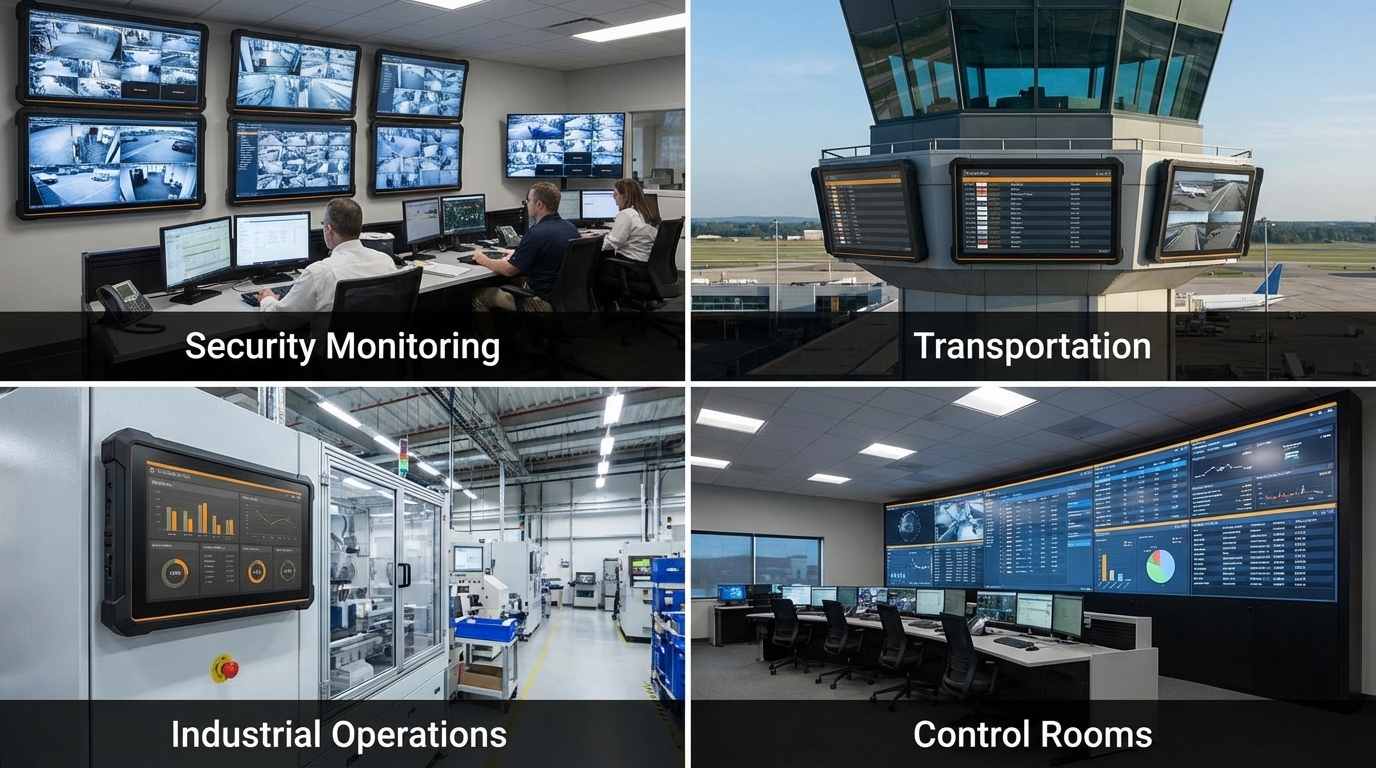
Durable displays are essential in environments where reliability and continuous operation cannot be compromised. Typical use cases include:
Security monitoring and surveillance checkpoints
Transportation systems such as airports and rail stations
Industrial operations and factory floors
Control rooms and critical infrastructure
How System Integrators Evaluate Durable Displays
Understanding the differences between consumer monitors and durable displays is the first step. For a deeper technical perspective on how system integrators evaluate reliability, deployment requirements, and long-term performance, read: How System Integrators Choose Durable Displays for Critical Environments
Conclusion
While consumer monitors may appear to be an economical initial option, they are not designed for professional surveillance environments. Durable displays provide the structural resilience, stability, and visual performance required for mission-critical operations. Choosing the right display is not simply a hardware decision—it is a strategic investment in system performance, operational continuity, and long-term cost efficiency.
Frequently Asked Questions
Can I use a consumer monitor for surveillance systems?
Consumer monitors are not designed for continuous 24/7 operation and will likely fail prematurely due to thermal stress and component fatigue. Durable displays are strictly recommended for reliable, long-term surveillance performance.
What makes a display durable?
A durable display is a professional-grade screen engineered for continuous operation. It features high MTBF ratings, environmental resistance (such as metal enclosures and protective glass), and active image retention prevention to ensure stable performance in real-world conditions.




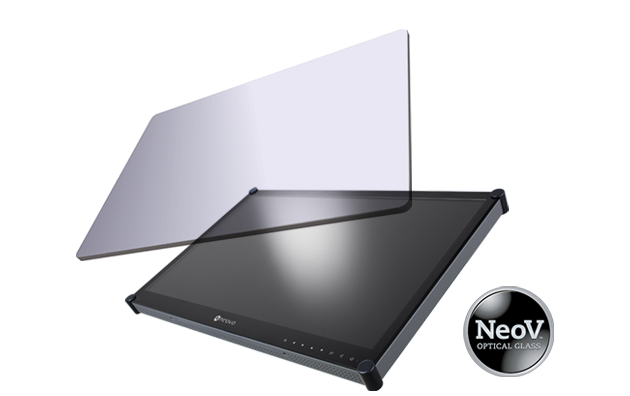 NeoV™ Optical Glass Screen
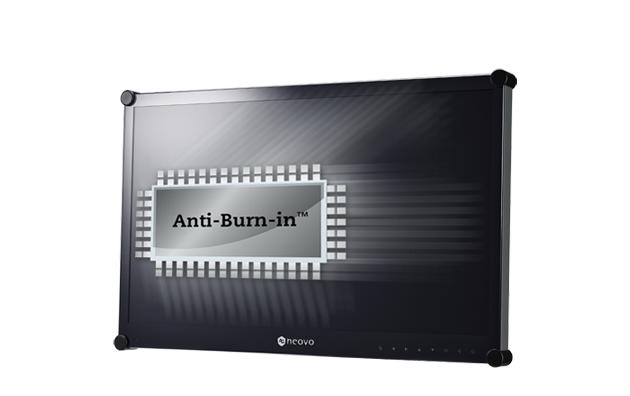 Anti-Burn-in™ Technology